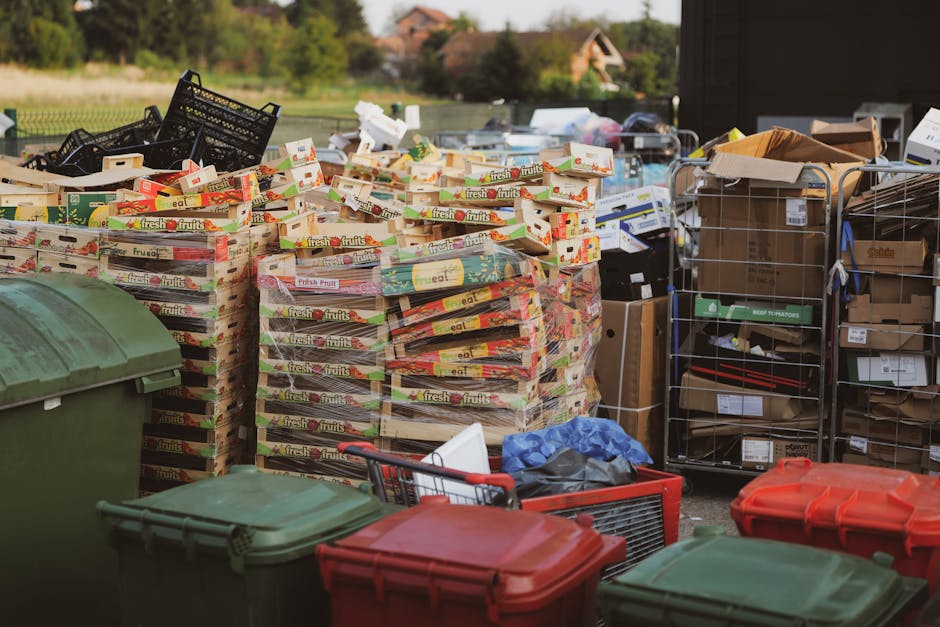
Commercial Waste in Marlow for reliable collection, sorting and removal

Commercial waste in Marlow needs handling that is steady, practical and suited to the way local organisations actually work. We provide commercial waste removal for offices, shops, hospitality premises, trades and mixed-use business sites, helping keep regular clearances orderly and compliant with the materials involved. That can include ongoing collections, one-off clearances and support for items that need careful sorting before they leave the site.
Our approach centres on removing waste in a way that supports day-to-day trading rather than interrupting it. Commercial rubbish can build up quickly when stock changes, equipment is replaced or a premises is refurbished, so our service focuses on clear arrangements and sensible handling of different waste streams. If you need to compare service options or plan a larger clearance, a plain conversation about the load and access is often the best starting point. Please ask for a quotation when you are ready.
We can help with a range of commercial waste types, and the work is easier to plan when the materials are identified clearly from the outset. For example, office clearances often involve furniture, paper and mixed general waste, while trading premises may need removal of packaging, obsolete fixtures or end-of-line stock. Waste that is separated properly before collection is usually simpler to process, and that can make the overall job more efficient for everyone involved.
Business waste removal arranged around your site
Business waste removal is more than taking away sacks and loose items. In practice, it often involves working around loading areas, shared entrances, opening hours and the specific limits of the premises. We can support scheduled clearances for businesses that want a more predictable arrangement, as well as ad hoc removals when there is a particular build-up of material after a busy period, relocation or internal change.
Some businesses want a simple recurring arrangement, while others need a single clearance for a storage room, yard or back-office area. A useful plan usually starts with a clear description of the waste itself: what it is, how much there is, whether it is bagged or loose, and whether anything is bulky, awkward or sensitive. If you are comparing options, please take a moment to note the main materials and access points before you enquire. That helps keep the conversation precise and practical.
Typical business waste decisions often include whether the material is mixed general waste, recyclable cardboard, office equipment, bulky furniture or another defined stream. The right approach depends on the load and the site rather than a one-size-fits-all assumption. In many cases, separating reusable or recyclable material from general refuse supports cleaner handling and a tidier clearance. If your business is preparing for a move, refit or storage clean-out, you can ask for a quotation once the scale is understood.
Office clearances for desks, chairs and paper waste

Office clearances are often needed when furniture is replaced, teams downsize, departments are reorganised or stored items have simply accumulated over time. We handle office waste removal with attention to bulky items, mixed stationery, archive material and the everyday contents that build up in workspaces. The aim is to make the removal straightforward without disrupting other activity on the premises.
In an office setting, the work often includes dismantling or moving items that do not fit easily through stairwells, lifts or narrow corridors. Desks, shelving, filing units and chairs may all need different handling depending on condition and layout. It is also common for paper waste and confidential material to be treated separately from general rubbish. Where relevant, our confidential shredding service can sit alongside a wider clearance so that sensitive documents are not mixed in with general waste.
Office waste is often best managed in stages, especially if the space remains in use while the clearance takes place. One room, floor or department may be completed before another, which helps keep things orderly. If a project also includes old furniture, fixed equipment or the contents of cupboards and storage areas, we can discuss how to group the work sensibly. Clear categorisation is helpful here because it reduces guesswork and supports a smoother removal plan.
Furniture, fixtures and bulky items from business premises

Commercial premises often need furniture clearance when offices are refreshed, reception areas are redesigned or stockrooms and meeting spaces are reorganised. We remove many kinds of bulky business items, including desks, chairs, storage units and mixed fittings that are no longer needed. The practical question is usually not whether an item is large, but how it can be moved safely and what category of waste it belongs to.
For some premises, furniture disposal is part of a wider site tidy-up; for others, it is the main task. This can include items from meeting rooms, waiting areas, back offices and communal spaces, together with the packaging or minor waste created as things are taken away. Where the load contains a mix of furniture types, it can help to separate wood, metal, soft furnishings and general rubbish before the collection. If you are deciding whether to clear a room gradually or all at once, that choice often depends on access, timing and what needs to stay in place.
When furniture is combined with other commercial waste, the best results come from matching the clearance to the actual contents rather than forcing everything into one generic category. That may mean planning around floors, loading points or operating hours. It may also mean identifying pieces that are ready to remove and those that still need to remain for day-to-day use. A precise description of the items usually makes the quotation stage more useful and helps the collection proceed with less disruption.
Waste streams, sorting and responsible handling
Commercial waste removal works best when materials are kept in sensible groups. Many businesses produce a mixture of general waste, cardboard, plastics, office materials, fixtures and occasional bulky items. We can deal with mixed commercial loads, but separating obvious streams in advance often creates a cleaner and more efficient process. That is especially useful where a premises has storage space, recycled packaging or old equipment that should not be treated as ordinary rubbish.
The exact handling depends on what is present and how it has been stored. Some loads contain light, compressible material; others involve heavy items, awkward shapes or waste that has accumulated in confined areas. If the waste includes items with different handling requirements, those should be identified clearly. The same applies to anything that may need special attention because of its condition. For general planning, it is often helpful to think in terms of what can be grouped together rather than what can simply be lifted in one go.
Good sorting also supports better decision-making about whether a collection should be split into separate parts. For example, cardboard and packaging may be straightforward, while desks, chairs and mixed office contents may need a different arrangement. If you are preparing a quotation request, two useful questions are: what is the material, and what is the volume? Those simple details are often enough to begin a practical discussion about the right type of commercial clearance.
Pricing, access and what affects a quotation

Commercial waste quotations are usually shaped by the quantity of material, the type of items, access to the premises and any sorting or handling needed on site. A clear access route may make a job simpler, while stairs, tight corridors, loading restrictions or limited parking can change the time and labour involved. The more accurately the load is described, the more useful the quotation is likely to be.
It can also be helpful to identify whether the waste is already gathered in one place or spread across several rooms. In some businesses, the material is boxed, bagged or stacked neatly; in others, the waste is mixed with items that still need separating. The quotation stage becomes more efficient when the main facts are presented in a concise way. If you are comparing collection options, our pricing and quotes page may help you understand the kind of information that is usually needed.
Useful details to prepare include the type of premises, the approximate amount to be removed, whether there are bulky items, and whether any items must be kept out of the load. Photographs can be useful when available, but a photo is not a replacement for a brief written description of the contents and access. If the waste is spread across several areas, it helps to say so plainly. That gives a more accurate starting point for the conversation and avoids unnecessary back-and-forth later on.
Office, retail and trade premises with different waste needs
Commercial waste is not identical from one premises to another, even when the address type sounds similar. An office may generate paper, redundant equipment and furniture. A retail site may have packaging, damaged stock and fittings. A trade premises may have mixed waste from store areas, shelving, display units or workshop spaces. The removal plan should follow the actual contents and the practical limits of the site.
That difference matters when deciding how the work should be organised. A tidy office clearance may focus on grouped furniture and archive material, while a retail clearance might involve stockroom waste, tills, display units and excess packaging. A trade site may need bulkier items moved from yards, stores or work areas before other parts of the premises can be addressed. If you know the main categories already, it is usually worth listing them clearly before you ask for a quotation.
In many jobs, the most sensible approach is to remove the easiest items first and then deal with the bulkier or more awkward waste once access has improved. This is not always necessary, but it can make the work more manageable. The important point is that the clearance should match the setting, not just the label of the service. That is what makes commercial waste removal useful in practice rather than merely nominal.
About Marlow

Marlow is a Thames-side town in Buckinghamshire, set on a pronounced bend of the River Thames and known for its attractive river frontage, historic core and distinctive blend of older streets and later development. The town sits within the wider South Buckinghamshire area and has long been associated with river trade, crossing points and movement between the Chilterns and the Thames valley. Its setting gives it a character that is both compact and varied, with a centre that feels closely connected to the water and surrounding hills. The High Street and adjoining streets preserve a strong sense of historic continuity, with many buildings reflecting the town’s growth through the eighteenth and nineteenth centuries as well as earlier phases of settlement.
One of Marlow’s most recognisable landmarks is the suspension bridge across the Thames, designed by William Tierney Clark and opened in 1832. It is often cited as an important engineering work of its era and remains central to the town’s identity. Nearby, the riverbank and towpath provide an obvious line through the landscape, linking the town to longer walking and boating routes. Marlow also has a strong recreational character, with parkland, waterside views and a lively centre that combines independent shops, places to eat and community activity. The parish church of St Peter is another historic point of interest, and the town’s streets include a number of listed buildings that contribute to its architectural variety. The result is a place that combines a compact market-town feel with scenery shaped by the river and the Chiltern edge, giving Marlow a clear identity within the county.
Builders’ waste and heavier clearance work
Some commercial waste arises from construction, reconfiguration or fit-out work rather than ordinary day-to-day trading. Builders’ waste can include timber offcuts, broken fixtures, packaging, plasterboard, metal pieces and other mixed materials left after maintenance or refurbishment. We can support these clearances when the load is defined and the site arrangements are clear. The important thing is to identify what has been left behind and what still belongs on the premises.
Heavier clearance work often benefits from a careful sequence. Loose material may be gathered first, followed by larger pieces that need more room to move. In some cases, the site may contain a mixture of building-related waste and standard business rubbish, which is best considered separately so that the removal plan remains sensible. If the project includes multiple rooms or work zones, that should be explained in the enquiry. For this type of job, our builders’ waste clearance page is a useful place to see how that work is described in more detail.
When a premises has been altered or partly stripped out, the waste can become awkward because items are stacked in corners or temporary storage spaces. A clear description of the load, plus any restrictions on access, is often enough to start planning the removal. Where possible, it is wise to separate genuinely reusable materials from broken or contaminated waste before the collection is arranged. That gives a clearer picture of the job and avoids confusion once the team arrives on site.
Special items, appliances and mixed disposal needs
Commercial premises sometimes need more than standard rubbish removal. Offices, hospitality venues, small stores and workshops may all have appliances, specialist equipment or mixed furnishings that need attention when they are replaced or cleared out. Depending on the item, disposal may require extra handling or separate grouping from the rest of the waste. The service is most straightforward when the items are identified in advance and described as clearly as possible.
This is especially relevant where a premises contains a blend of bulky furniture, electrical items and ordinary waste. Some loads are simple; others include items that should be kept apart because they are awkward, heavy or intended for a different processing route. If your business is replacing a fridge, removing a sofa from customer seating or clearing a mixed storage area, the scope should be explained carefully. Our fridge and appliance removal page may help where such items are part of the job.
The same idea applies to mixed premises where the waste does not fall neatly into one category. A warehouse office, hospitality back area or retail stockroom may contain a surprising combination of cardboard, fixtures, fittings and larger items. The aim is not to overcomplicate the job, but to recognise what is actually present so it can be removed in a sensible order. That practical approach is often the difference between a routine clearance and a confusing one.
Booking, timing and the easiest way to request a quote
If you are planning commercial waste removal in Marlow, the simplest next step is to describe the materials, the site and the likely quantity as clearly as you can. A short note about the type of premises, the access available and whether the waste is bagged, boxed or loose will usually be enough to begin. Where the load is mixed, it helps to mention the largest or most awkward items first.
For businesses that want a straightforward booking route, our book online page is available alongside direct enquiries. If you are still deciding what should be removed, it is perfectly acceptable to gather the key details first and then request a quotation once the list is ready. A simple, well-described enquiry saves time and makes it easier to match the job to the right collection plan. Please get in touch for a quotation when you are ready.
Commercial waste management works best when it stays practical. That means one clear list of items, one clear plan for access and one clear understanding of what stays and what goes. Whether the task is an office clearance, a furniture removal or a mixed business load, we are ready to help with a service that is designed around the waste itself. If you would like to move ahead, ask for a quotation and we can discuss the most suitable arrangement.